
I haven’t been writing and posting lately. Is it because I don’t have anything to say? Or is it boring to write something every week? Neither. If it were either of those, I wouldn’t be here talking about such an important topic—Time Management.
When too many different things come at once, I often find myself overwhelmed and underprepared.
I remember back in school or college, there were always multiple things to juggle—studies, exams, extracurricular activities, and social interactions. But today, even handling two or more things at the same time feels like a lot. The best explanation I can give myself is poor time management and a lack of planning. So, I decided to course-correct and introduced a few changes in my routine.
Time Tracking
To begin with, I had no clue how I was spending my time. So, as a first step, I tracked my daily activities for a week. From that list, I realized three key things:
- Activities that are non-negotiable each day
- Time lost on social media
- New events that were consuming chunks of my day
This exercise gave me the clarity I needed to sort and prioritize all the tasks on my plate.
Setting Goals
I recently came across the Eisenhower Matrix, a simple yet effective quadrant-based goal-setting tool that helps you declutter your to-do list and focus on what truly matters. The matrix is based on the 4 D’s: Do, Decide, Delegate, and Delete.
This framework puts tasks into four categories:
- Urgent and Important (Do)
- Important but Not Urgent (Decide)
- Urgent but Not Important (Delegate)
- Not Urgent and Not Important (Delete)

This self-explanatory matrix helps identify short-term goals that need immediate attention while allowing space for long-term planning. Often, our time gets consumed by tasks that fall in the last quadrant—neither important nor urgent—but they still occupy our mental space. While it’s not always easy to eliminate these, simply identifying and acknowledging them brings perspective and control.
Planning the Day
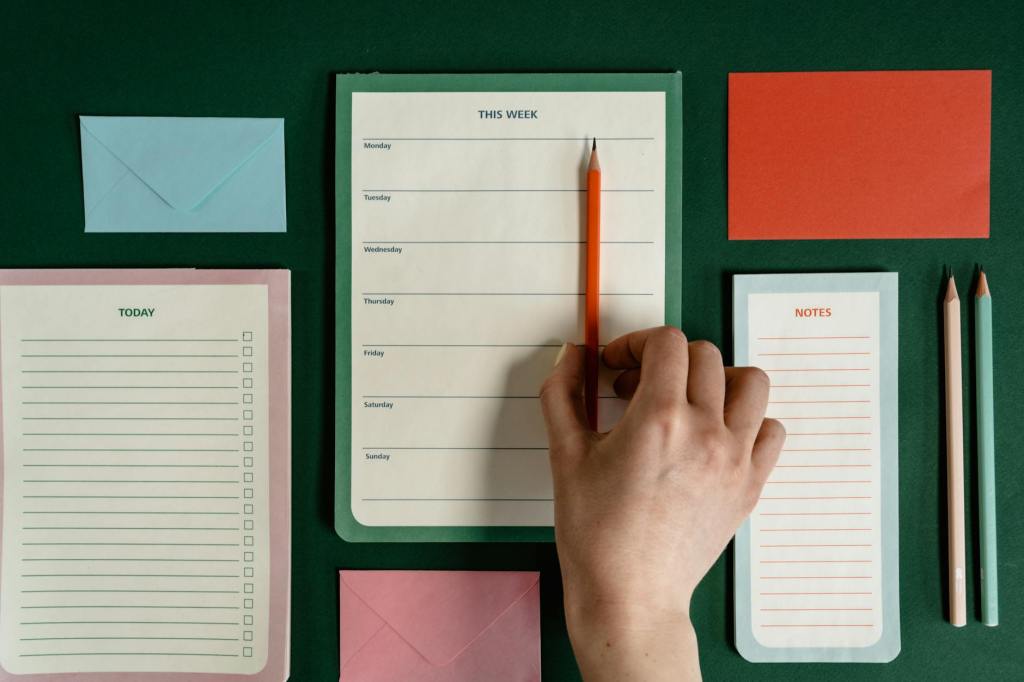
Planning is the most important step. I don’t like to plan every second of my day, but writing down the necessary tasks definitely helps me optimize time. I use a simple planner format that divides tasks into two lists:
- Must-Do: High-priority tasks for the day.
- To-Do: Secondary tasks, completed if time permits.

Sometimes, tasks from today’s To-Do list might move into tomorrow’s Must-Do list—and that’s completely fine.
Scheduling vs. Spontaneity
I often find myself torn between planning and letting the day unfold naturally. While I do have a rough schedule, I also leave some parts of the day open for spontaneity. After all, some tasks take longer on certain days and get done quickly on others. I follow the plan, but not with minute-by-minute rigidity. Flexibility keeps me from burning out.
Reducing Distractions
One key thing I noticed—I tend to keep myself available for every notification that pops up on my phone. The need to respond and stay informed slowly pulls me into a spiral of social media scrolling.
To combat this, I started using a sand clock (or timer). I focus fully on work while the sand runs, then take a 10-minute break. This method has helped shift my attention away from my phone and back to the task at hand.
These four steps are gradually changing the way I organize my day. They’ve helped me prioritize and complete tasks on time. That’s exactly what made it possible for me to write this blog today.
Hoping to be staying more planned, more consistent, and more focused.






 Yourstrulyme
Leave a comment